
NHS Pay Rise 2026-2027: 3.3% Increase Confirmed for 1.4 Million Staff

On 12 February 2026, Health and Social Care Secretary Wes Streeting ended years of pay uncertainty by announcing the government’s full acceptance of the NHS Pay Review Body (NHSPRB) Thirty-Ninth Report.
In a landmark move, the 3.3% pay rise for 2026/27 has been authorised two months before the start of the financial year. This ensures that more than 1.4 million NHS workers will see the increase in their April bank accounts, avoiding the frustration of late payments and complex back-tax calculations seen in previous cycles.
However, the 2026 award is about more than just a percentage. It introduces a "fairer deal" for nurses through structural re-evaluation and a focus on graduate retention, setting a new precedent for how the NHS rewards its workforce.
The 2026 Quick-Fact Summary
The 2026/27 Pay Award at a Glance
The UK Government has confirmed a 3.3% consolidated pay increase for NHS staff on Agenda for Change contracts, effective from 1 April 2026. This announcement affects approximately 1.4 million healthcare workers across England, Wales and Northern Ireland, including nurses, midwives, paramedics, allied health professionals, healthcare assistants and administrative staff.
For the first time in six years, NHS workers will receive their pay award on time in April, avoiding the delays and backdating issues that have plagued previous pay rounds and damaged staff morale.
What This Means for You: A Band 5 nurse on £29,970 will see their salary increase by approximately £989 per year (£82/month), whilst a Band 3 healthcare assistant on £25,674 will receive around £847 more per year (£71/month).
Who Receives the NHS Pay Increase?
The 3.3% pay rise applies to all staff employed under Agenda for Change contracts, which covers the vast majority of NHS employees. This includes:
Clinical Staff
- Registered nurses and health visitors
- Midwives
- Paramedics and ambulance staff
- Operating department practitioners
Allied Health Professionals
- Physiotherapists
- Occupational therapists
- Radiographers
- Dietitians
Support Staff
- Healthcare assistants
- Administrative and clerical staff
- Porters and domestic staff
- Estates and facilities staff
For the first time in six years, NHS workers will receive their pay award on time in April, avoiding the delays and backdating issues that have plagued previous pay rounds and damaged staff morale.
Updated NHS Pay Bands 2026-2027
The following table shows the updated annual salaries for each Agenda for Change pay band from 1 April 2026, reflecting the 3.3% increase:
NHS Pay Band Salaries 2026-2027 (England and Northern Ireland)
| Pay Band | Entry Point | Top Point | Typical Roles |
|---|---|---|---|
| Band 2 | £23,615 | £24,336 | Healthcare assistants, porters, domestic staff |
| Band 3 | £24,336 | £25,674 | Senior healthcare assistants, admin staff |
| Band 4 | £26,530 | £29,114 | Assistant practitioners, theatre support workers |
| Band 5 | £29,970 | £36,483 | Newly qualified nurses, midwives, paramedics, physiotherapists |
| Band 6 | £36,483 | £44,503 | Specialist nurses, senior allied health professionals |
| Band 7 | £44,503 | £50,952 | Advanced practitioners, team leaders, ward managers |
| Band 8a | £53,755 | £60,504 | Senior managers, advanced clinical specialists |
| Band 8b | £62,215 | £72,293 | Assistant directors, principal specialists |
| Band 8c | £74,290 | £85,601 | Directors, executive roles |
| Band 8d | £88,168 | £101,622 | Senior directors, chief officers |
| Band 9 | £105,504 | £121,271 | Executive directors, chief executives |
Note: Wales applies a 1.5% uplift on top of England rates, meaning all Welsh NHS pay points are 1.5% higher than those shown above.
High Cost Area Supplements (London Weighting)
NHS staff working in London and surrounding areas receive additional High Cost Area Supplements on top of their base salary:
| Zone | Percentage | Minimum Payment | Maximum Payment |
|---|---|---|---|
| Inner London | 20% of basic salary | £5,791 | £8,745 |
| Outer London | 15% of basic salary | £4,869 | £6,137 |
| Fringe Areas | 5% of basic salary | £1,346 | £2,270 |
Additional Support for Nurses: A Game-Changing Career Progression Package
Alongside the 3.3% pay increase, the Government announced on 11 February 2026 a significant package of measures specifically to support nursing staff, following intensive engagement with the Royal College of Nursing and the NHS Staff Council.
TL;DR for Nurses: If you're a Band 5 nurse, you get the 3.3% pay rise PLUS your employer must review your role. If you're working above Band 5 level, you'll be regraded and receive backpay to 1 April 2026. Extra funding has been provided specifically for this.
Band 5 Nursing Role Reviews
Every Band 5 nurse in England will have their role reviewed by their employer to ensure their pay and job description accurately reflects the work they actually do. The Government recognised that many nurses have been working at higher levels without appropriate compensation.
Key points:
- Mandatory reviews for all Band 5 nurses - your employer must conduct this
- Additional funding provided separately from the 3.3% pay award
- Where nurses are found to be working above Band 5 level, they will be regraded
- Any resulting pay increases will be backdated to 1 April 2026
- Board-level oversight required to ensure timely completion
National Nursing Preceptorship Programme
A new national preceptorship programme will be rolled out to ensure every newly qualified nurse receives structured support and mentorship in their first year of practice, regardless of where they work. This addresses long-standing concerns about inconsistent support for graduate nurses entering the profession.
Graduate Pay Priority
The Government has committed to making graduate pay a priority as part of ongoing reforms to the Agenda for Change pay structure. This responds to concerns that newly qualified nurses often start on low pay bands without adequate progression opportunities.
Wider Nursing Workforce Review
Following the Band 5 nursing role reviews, the Government will evaluate the evidence to determine whether further action is needed across other nursing bands to ensure all nurses are being paid fairly for their responsibilities.
What the NHS Pay Review Body Recommended
The NHS Pay Review Body (NHSPRB), an independent advisory body, submitted its 39th report on 5 February 2026 after gathering evidence from the Department of Health and Social Care, NHS Employers, trade unions and other stakeholders.
NHSPRB's Key Considerations
The Pay Review Body made its recommendation taking into account:
The Pay Review Body noted that whilst vacancy rates have fallen and the NHS workforce continues to grow, staff are working under increased pressure. Sickness absence rates remain elevated at approximately one percentage point higher than pre-pandemic levels, equivalent to 12,200 fewer full-time equivalent staff in England alone.
Government Response and Implementation Timeline
Health Secretary Wes Streeting announced on 12 February 2026 that the Government had accepted the NHSPRB recommendations in full. In his statement, he emphasised:
"We have listened to the workforce and understand the difficulties they face when pay awards are not delivered on time. That's why this Government committed to speeding up the pay review process, remitting the pay review bodies months earlier than previous years, and submitting written evidence earlier too. In making this award, I am accepting in full the recommendation from the NHS Pay Review Body."
The pay increase represents a real-terms rise, as it exceeds the Office for Budget Responsibility's forecast inflation rate of 2.2% for the 2026-27 financial year. It is also the third consecutive year NHS staff will receive an above-forecast inflation pay award.
Implementation Timeline
|
Date |
Milestone |
Details |
|---|---|---|
|
5 February 2026 |
NHSPRB report submitted |
Independent Pay Review Body recommendations delivered to government |
|
12 February 2026 |
Government acceptance |
Health Secretary announces full acceptance of recommendations |
|
1 April 2026 |
Pay rates effective |
New salary scales come into force |
|
End of April 2026 |
Payment to staff |
Updated salaries appear in pay packets via ESR - first on-time payment in 6 years |
This marks the first time in six years that NHS Agenda for Change staff will receive their annual pay award on time, without delays or the need for backdating.
Regional Variations: England, Wales and Northern Ireland
England
The 3.3% pay award applies to all NHS staff on Agenda for Change contracts in England. The Department of Health and Social Care's funding settlement for 2026-27 includes a revenue budget of £211 billion, representing a 4.5% cash increase on 2025-26.
However, the DHSC had initially indicated that financial plans only allowed for a 2.5% pay uplift without making trade-offs against headline health commitments. The Government's decision to accept the 3.3% recommendation means additional funding or reprioritisation will be required.
Wales
The Welsh Government has also accepted the NHSPRB recommendations. NHS Wales staff will receive the 3.3% increase, applied on top of the existing 1.5% Welsh premium. This means all Agenda for Change pay points in Wales are 1.5% higher than their English equivalents.
The Welsh Government's Draft Budget for 2026-27 proposes that funding for the Health and Social Care sector increases by 3.6% to £12.7 billion. However, NHS Wales is forecasting a deficit of £173.2 million for 2025-26, requiring savings of approximately £275 million.
Northern Ireland
The Northern Ireland Minister of Health has accepted the pay recommendations, though implementation faces significant challenges. The Department of Health's funding settlement for 2026-27 represents just a 0.9% increase to £8.5 billion.
Furthermore, the cost of implementing the 2025-26 pay award (announced in November 2025 and paid in February 2026) will be deducted from the 2026-27 budget, creating additional financial pressure.
The Minister has committed to implementing an interim "downpayment" for Health and Social Care staff from 1 April 2026 as a demonstration of intent to avoid the delays that have characterised previous years. Northern Ireland staff have historically experienced significant delays in receiving pay awards compared to their colleagues in England and Wales.
Scotland
This pay award does not apply in Scotland. NHS Scotland has separate pay arrangements negotiated directly between the Scottish Government, NHS Scotland and trade unions, and does not use the NHS Pay Review Body process.
Trade Union Response
The response from healthcare trade unions has been mixed, with most expressing disappointment that the pay award does not go far enough to address years of real-terms pay erosion and current workforce pressures.
Industrial Relations Context
National industrial relations are described by stakeholders as "challenging," "febrile" and "fragile." Several unions are consulting members and comparing this award with other NHS staff groups and public sector settlements before deciding their response. No formal strike ballots have been announced yet.
Royal College of Nursing (RCN)
Professor Nicola Ranger, RCN General Secretary and Chief Executive, described the pay award as "an insult," stating:
"Unless inflation falls, the Government is forcing a very real pay cut on its NHS workers. This knife-edge gameplaying is no way to treat people who prop up a system in crisis. We will compare and contrast this announcement with the awards for the rest of the NHS and the public sector as a whole before deciding a way forward. Nursing staff will not tolerate the disrespect of other years, when we were bottom of the pile."
However, the RCN welcomed the separate announcements on career progression, calling it "significant progress" and noting it was "the first time nursing has been prioritised in this way."
UNISON
Helga Pile, UNISON's head of health, said:
"Hard-pressed NHS staff will be downright angry at another below-inflation pay award. Yet again, they're expected to keep delivering more while effectively being given less, as pay slides behind living costs. For thousands at the bottom of the salary scale in England, half their increase has gone on bringing their hourly pay rate up to the legal minimum."
Unite the Union
Sharon Graham, Unite General Secretary, stated:
"It beggars belief that a Labour Government should seek to ride roughshod over the health unions when deciding on NHS pay. For too long, NHS workers have been overworked, underpaid and undervalued. Today's announcement will simply increase the problems of low pay that has seen thousands of healthcare workers leave, worsening the recruitment and retention crisis in our NHS."
GMB
Rachel Harrison, GMB National Secretary, welcomed efforts to ensure NHS workers receive their pay increase on time in April but stated:
"This award is just not enough to make up for more than a decade of pay cuts under the Tories. NHS workers deserve more and GMB will fight for that at the long overdue Agenda for Change structural talks we have now been promised."
Other Union Responses
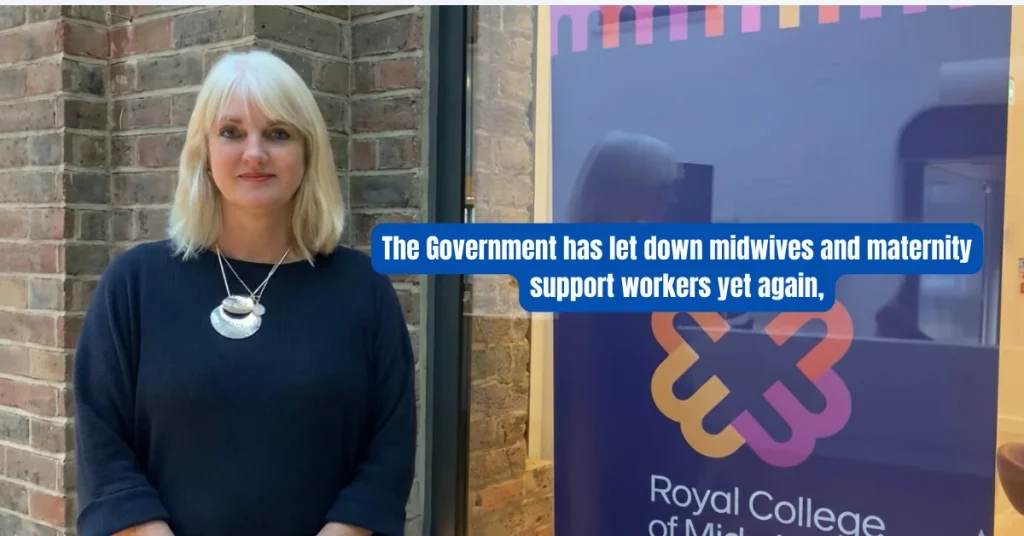
Royal College of Midwives: Gill Walton said the announcement was "an insult to midwives who work 100,000 unpaid hours every week just to keep maternity services running."
Society of Radiographers: The only union to submit evidence to the Pay Review Body this year. Dean Rogers stated: "The gap between NHS pay and average earnings continues to grow, further undermining morale, recruitment and retention in radiography."
NHS Workforce Context and Challenges
The Good News: Progress on Recruitment and Retention
Industrial Relations Context
- Vacancy rates falling: Nursing vacancy rate in England down to 6.0% (from 7.5% last year)
- Workforce growing: 0.7% growth in England, 1.6% in Northern Ireland, 1.3% in Wales
- Better retention: Leaver rate at 9.5%, lowest since 2010 (excluding COVID period)
- Overall vacancy rate: England at 7.4% (down from 7.8%), Wales at 5.4% (down from 5.8%)
The Challenges: Ongoing Workforce Pressures
- Sickness absence elevated: 5.2% in England, 8.0% in Northern Ireland, 6.3% in Wales (one percentage point above pre-pandemic)
- Financial pressures: Many NHS Trusts have strict vacancy controls, making recruitment harder
- International recruitment plummeting: 76% fewer Health and Care Worker visas for nurses in Q1 2025
- Graduate job shortages: Some newly qualified nurses struggling to find posts despite "Graduate Guarantee"
- Morale concerns: Staff report increased pressure, workload and patient complexity
- Uneven growth: Clinical staff numbers up, but support and admin staff numbers falling
Workforce Growth and Composition
The NHS workforce has continued to grow, albeit at a slower pace than in recent years:
- England: 0.7% growth in the year to October 2025 (1,225,623 FTE staff - 22% higher than 2019)
- Northern Ireland: 1.6% growth in the year to September 2025 (14% higher than 2019)
- Wales: 1.3% growth in the year to June 2025 (22% higher than 2019)
However, growth has been uneven. Professionally qualified clinical staff numbers (nurses, allied health professionals) have grown faster, whilst support and administrative staff numbers have stagnated or declined. For example, in England:
- Professionally qualified staff: +2.6% year-on-year
- Support and infrastructure staff: -1.2% year-on-year
Financial Pressures and Vacancy Controls
NHS organisations across all three nations are operating under significant financial pressure. The NHS Pay Review Body heard extensive evidence that employers have introduced stricter vacancy controls in response to these pressures:
- Requirements for senior approval for all recruitment
- Delays in replacing staff who leave
- Near-total freezes on external recruitment at some organisations
- Restrictions on recruiting newly qualified graduates
Staff report that these controls are increasing workload and pressure on remaining team members, affecting morale, motivation and work-life balance. The Pay Review Body noted concerns that asking staff to meet growing patient needs within an increasingly pressured financial context may exacerbate challenges of morale and motivation.
Sickness Absence: A Persistent Challenge
Sickness absence rates have stabilised at approximately one percentage point higher than pre-pandemic levels:
- England: 5.2% (equivalent to 26.6 million staff days lost - 12,200 fewer FTE staff)
- Northern Ireland: 8.0%
- Wales: 6.3%
The most common reason for absence in England is anxiety, stress, depression and other psychiatric problems, accounting for 28% of all absences. High sickness rates reduce available staffing and indicate workforce wellbeing challenges that need addressing.
Agenda for Change Pay Structure Reform
Beyond the 3.3% pay increase, the Government has committed to working with the NHS Staff Council to invest in reforming the Agenda for Change pay structure. These structural reform discussions aim to address long-standing issues that have frustrated NHS staff for years.
Industrial Relations Context
- Vacancy rates falling: Nursing vacancy rate in England down to 6.0% (from 7.5% last year)
- Workforce growing: 0.7% growth in England, 1.6% in Northern Ireland, 1.3% in Wales
- Better retention: Leaver rate at 9.5%, lowest since 2010 (excluding COVID period)
- Overall vacancy rate: England at 7.4% (down from 7.8%), Wales at 5.4% (down from 5.8%)
What Needs Fixing: Key Problems with the Current System
- Limited pay progression within bands: Staff can remain on the same pay point for years
- Insufficient promotion incentive: Small pay increase when moving up a band doesn't reflect increased responsibility
- Unsocial hours payment anomalies: Can result in take-home pay actually falling when promoted due to how percentages work across bands
- Pay compression: Entry and mid-career pay points too close together, limiting progression
- Low graduate starting salaries: Struggle to attract and retain new talent in competitive market
The reforms are being discussed through formal negotiations between:
- NHS Staff Council (representing trade unions and employers)
- Department of Health and Social Care (England)
- Department of Health (Northern Ireland)
- Welsh Government
Timeline: Reforms are expected to be agreed and implemented during 2026-27, with any resulting pay increases backdated to 1 April 2026. The Government has committed separate additional funding for these reforms, meaning they won't come out of existing budgets.
Trade union perspective: Several unions have expressed frustration at the slow pace of reform discussions. The RCN and most other unions withdrew from the Pay Review Body process, citing it as "not fit for purpose," and are pushing for direct negotiations on structural reform instead.
Impact on Take Home Pay
The actual impact on take-home pay will vary depending on your current pay band, hours worked, pension contributions, tax code and location. Here are detailed examples:
Band 5 Nurse (Entry Point, Full-Time, England)
|
Item |
Monthly Amount |
Annual Amount |
|---|---|---|
|
Gross Salary (2026-27) |
£2,498 |
£29,970 |
|
Less: Income Tax (20%) |
-£291 |
-£3,494 |
|
Less: National Insurance |
-£218 |
-£2,613 |
|
Less: NHS Pension (8.3%) |
-£207 |
-£2,487 |
|
Approximate Take-Home Pay |
£1,781 |
£21,376 |
|
Monthly Increase from 3.3% |
+£58 |
+£696 |
Band 3 Healthcare Assistant (Top Point, Full-Time, England)
|
Item |
Monthly Amount |
Annual Amount |
|---|---|---|
|
Gross Salary (2026-27) |
£2,140 |
£25,674 |
|
Less: Income Tax (20%) |
-£176 |
-£2,115 |
|
Less: National Insurance |
-£162 |
-£1,939 |
|
Less: NHS Pension (7.1%) |
-£152 |
-£1,823 |
|
Approximate Take-Home Pay |
£1,649 |
£19,797 |
|
Monthly Increase from 3.3% |
+£50 |
+£600 |
Band 7 Ward Manager (Entry Point, Full-Time, Outer London)
|
Item |
Monthly Amount |
Annual Amount |
|---|---|---|
|
Base Salary (2026-27) |
£3,709 |
£44,503 |
|
Plus: Outer London HCAS (15%) |
+£556 |
+£6,675 |
|
Total Gross Salary |
£4,265 |
£51,178 |
|
Less: Income Tax (20%/40%) |
-£939 |
-£11,271 |
|
Less: National Insurance |
-£372 |
-£4,463 |
|
Less: NHS Pension (12.5%) |
-£533 |
-£6,397 |
|
Approximate Take-Home Pay |
£2,421 |
£29,047 |
|
Monthly Increase from 3.3% |
+£88 |
+£1,056 |
These are illustrative examples only. Actual take-home pay will vary based on individual circumstances including tax code, student loan repayments, childcare vouchers and other deductions.
National Living Wage Implications
Crisis Point for Lower Bands
The National Living Wage (NLW) will increase to £12.71 per hour from April 2026, representing a 4.1% rise. This creates a critical issue:
- Band 2 maximum: £12.51 per hour - BELOW the new legal minimum wage
- Band 3 entry: £12.75 per hour - just 4p above minimum wage
The Government will need to implement emergency top-up payments to ensure Band 2 staff receive at least the legal National Living Wage. This issue highlights the severe compression at the lower end of the Agenda for Change pay structure and demonstrates why the structural reforms currently under discussion are urgently needed.
For lowest-paid staff: UNISON noted that for thousands at the bottom of the salary scale in England, approximately half their 3.3% increase will go towards bringing their hourly pay rate up to the legal minimum, significantly reducing the benefit of the pay award.
Comparison with Previous Pay Awards
|
Financial Year |
Pay Award |
CPI Inflation |
Implementation |
|---|---|---|---|
|
2023-24 |
5.0% + one-off payment |
7.5% (avg) |
Delayed (after industrial action) |
|
2024-25 |
5.5% |
3.2% (avg) |
Announced March, paid later |
|
2025-26 |
3.6% |
2.7% (forecast) |
Announced May, paid August |
|
2026-27 |
3.3% |
2.2% (forecast) |
On time - April 2026 |
While the percentage is lower than recent years, the on-time implementation is significant progress that staff have been requesting for years. The declining percentages reflect falling inflation rates rather than a policy shift.
Frequently Asked Questions
What to Do Next: Action Steps
Your 5-Step Checklist
- Check your current details: Log into ESR self-service to confirm your current band and spine point
- Calculate your new salary: Use the NHS Pay Calculator to work out what you will earn from April 2026
- Watch for your April payslip: Confirm the increase has been correctly applied (end of April 2026)
- Band 5 nurses: Speak to your line manager about the role review process and timeline
- Stay informed: Follow your union and NHS Employers for updates on structural reforms and next steps
Key Takeaways
The Good News
- 3.3% consolidated pay rise for all 1.4 million AfC staff
- In your pay packet end of April - first on-time payment in 6 years
- Above forecast inflation (2.2%) = real-terms increase officially
- Extra support for Band 5 nurses - role reviews + preceptorship
- Structural reforms coming with separate funding
- Vacancy rates falling, retention improving
The Challenges
- 3.3% consolidated pay rise for all 1.4 million AfC staff
- In your pay packet end of April - first on-time payment in 6 years
- Above forecast inflation (2.2%) = real-terms increase officially
- Extra support for Band 5 nurses - role reviews + preceptorship
- Structural reforms coming with separate funding
- Vacancy rates falling, retention improving
The Bottom Line
The 3.3% NHS pay rise for 2026-27 delivers a real-terms increase above forecast inflation and, crucially, will be paid on time for the first time in six years - a significant improvement that addresses years of staff frustration with delayed payments.
For Band 5 nurses, the additional career progression package offers meaningful improvements beyond the headline pay award, with mandatory role reviews potentially leading to regrading and higher pay for thousands of nurses working above their current band level.
However, unions and many NHS staff remain concerned that the award doesn't adequately address:
- Recruitment and retention challenges in a competitive labour market
- Restoration of pay to pre-austerity levels in real terms
- Proper compensation for increased workload, patient complexity and pressure
- The growing gap between NHS pay and average earnings
The ongoing Agenda for Change structural reform discussions offer hope for more substantial changes to fix long-standing problems with the pay system, including limited progression, insufficient promotion incentives, and pay compression. However, unions have expressed frustration that progress has been slower than expected.
With sickness absence elevated, financial pressures leading to strict vacancy controls across many NHS organisations, and national industrial relations described by stakeholders as "challenging" and "fragile," the NHS faces significant workforce challenges in the year ahead.
For individual NHS staff: The pay increase provides welcome additional income from April 2026 - approximately £58-£88 more per month depending on your band - and the on-time implementation removes the uncertainty and financial strain that delayed payments have caused in previous years. Band 5 nurses should engage with their employers about the role review process to ensure they're being paid correctly for the work they do.
As the NHS implements the 10 Year Health Plan and works to reduce waiting lists whilst achieving ambitious productivity targets, maintaining a motivated, adequately compensated and growing workforce will be critical to success.